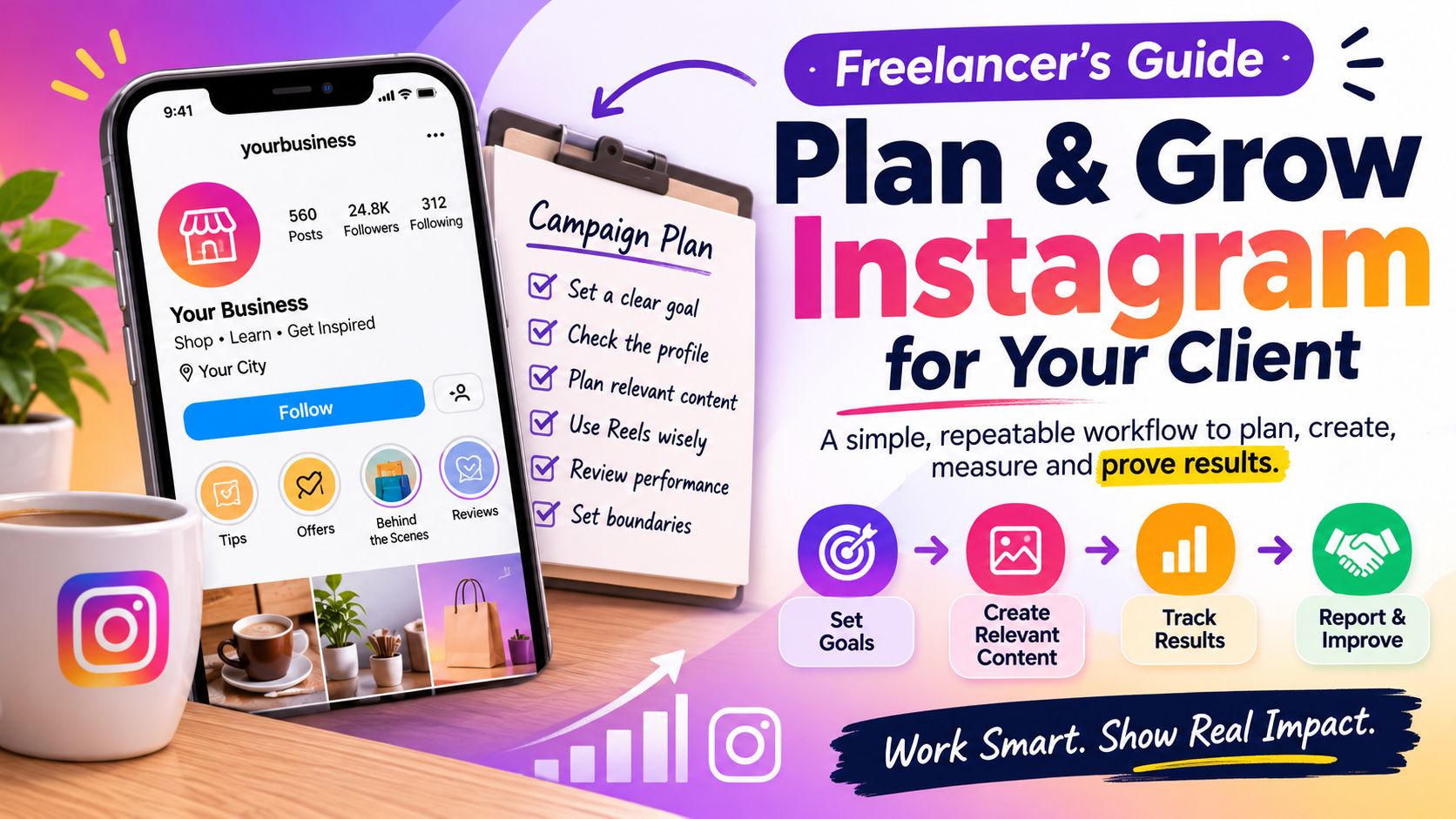
Managing Instagram for a client is more than posting regularly. A freelancer needs to understand the business goal, prepare the account, choose content that fits the audience, and report what changed. Without that process, a campaign can produce activity without answering the client’s real question: did Instagram help the business?
This guide gives freelance social media managers a repeatable workflow for planning an Instagram growth campaign for a client. It is designed for freelancers working with a local business, creator, shop or service provider—not as a promise of a particular number of followers or sales.
1. Agree on the result before planning posts
Ask the client what Instagram should help them do. Their priority might be to make more local people aware of a shop, receive enquiries, sell a product, build a creator audience or support a launch. These goals require different content and measurements.
Write down one primary goal and one or two supporting measures. For example, a local salon may care about profile visits and booking enquiries, while a creator may focus on video reach, saves and follows. Set a baseline from the account’s current Insights so your report has a meaningful comparison.
2. Check the profile before sending more visitors to it
Before increasing reach, make sure a new visitor can understand the offer. Review the name, bio, profile image, contact method, location if relevant, and the link destination. The first screen should make it clear who the account serves and what the visitor can do next.
Test the link on a phone. If it opens a page with several unclear choices, fix that before promoting the account. Do not direct potential customers to a broken page, an outdated offer or a profile that has not been updated in months.
3. Build content around questions real customers ask
Do not fill a calendar with generic quotes just to keep the account active. Gather questions from the client’s sales conversations, comments, reviews and support messages. Turn those questions into useful posts: a short demonstration, a before-and-after explanation with permission, a common mistake, a product comparison or a clear answer to a service question.
Use a manageable content mix. For a small account, a few well-prepared posts each week may be more realistic than promising daily publishing. Include a clear next step when it fits the post: ask a question, visit the menu, request a quote or book an appointment.
4. Make short-form video useful without copying trends blindly
Reels can introduce a business to people who do not already follow it, but the opening needs to quickly show why the video matters. Start with the result, question or problem. Keep the explanation focused, add readable on-screen text where helpful, and end with the next step.
Only use a trend when it fits the brand and audience. A trend that gets views from people who are unlikely to become customers may look successful in a screenshot but contribute little to the client’s goal.
5. Use a simple weekly review
At the end of each week or campaign, compare like with like. Look at reach, profile visits, follows, saves, shares, link taps and enquiries where those metrics are available. A high reach number alone does not show whether the right people saw the post or took action.
- Which post brought the most relevant profile visits?
- Which content earned saves or shares that suggest lasting usefulness?
- Did enquiries or website activity change during the period?
- What will you test next: the topic, format, opening, timing or call to action?
Change one or two things at a time. If you change the content, audience, offer and posting pace together, it becomes difficult to learn what helped.
6. Set safe, clear boundaries with the client
Agree on who approves posts, how quickly the client must provide assets, what is included in your fee, and who owns the account and content. Use the platform’s official access and permission tools where available; do not ask a client to send a personal password in a chat. Get written approval before publishing claims, using customer images or running promotions.
If you or the client consider third-party promotion, discuss the platform’s rules and the account’s risk tolerance first. Never promise guaranteed reach, sales, ranking or a specific follower outcome. Read each service’s delivery terms carefully and make sure any action is authorized by the account owner.
A practical campaign brief freelancers can reuse
- Client and audience: who should this account reach?
- Goal: what business action should Instagram support?
- Baseline: what are the current profile, content and enquiry numbers?
- Content: which customer questions and offers will the posts address?
- Approval: who signs off, and by when?
- Measurement: which two or three metrics will be reviewed?
- Next test: what single change will be made in the next cycle?
This process helps a freelancer explain the work in business terms, keep expectations realistic and build a stronger case for renewal. If you need to compare available Instagram promotion options for an authorized client campaign, review the current listings and conditions on the SMMCute services page.