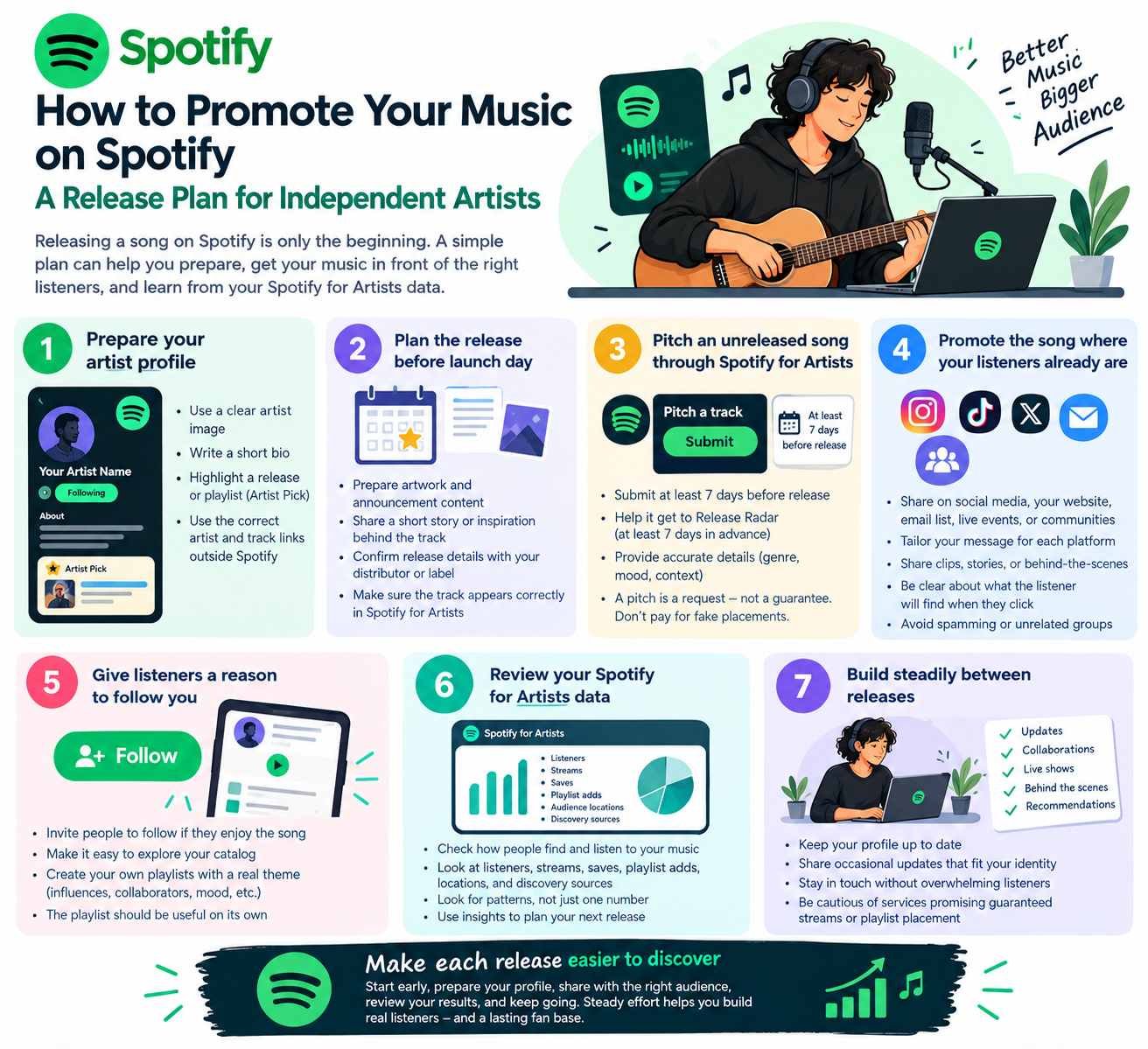
Releasing a song on Spotify is only the beginning. Listeners need a way to discover it, understand who made it, and find more of your music if they enjoy it. A simple release plan can help independent artists organize those steps without relying on a promise of instant streams or playlist placement.
This guide covers practical ways to prepare a release, reach potential listeners, and learn from your Spotify for Artists data.
1. Prepare your artist profile
Before promoting a new track, check that your Spotify artist profile is complete and current. Use a clear artist image, write a short bio, and make sure your profile represents the music you release.
You can also use your profile to highlight a release or playlist. Spotify for Artists has profile tools such as Artist Pick, which can feature selected music or other content at the top of your profile. Check the available options in your account, as features and eligibility can vary.
When you share your music outside Spotify, use the correct artist and track links. This makes it easier for listeners to reach the right release and follow your artist profile.
2. Plan the release before launch day
Give yourself time to prepare artwork, announce the release, and share useful context about the song. A short explanation of how the track came together, what inspired it, or who helped create it can give fans a reason to pay attention beyond the release date.
If you work with a distributor or label, confirm the delivery schedule and release details with them. Make sure the track appears correctly in Spotify for Artists before relying on its link in promotional posts.
3. Pitch an unreleased song through Spotify for Artists
Artists with access to Spotify for Artists can submit an upcoming, unreleased song to Spotify’s playlist editors. Spotify says to deliver the track at least seven days before its release date; pitching at least seven days in advance also allows the track to be added to followers’ Release Radar playlists. The pitch form asks for information about the music, so provide accurate details about its genre, mood, and context. Spotify’s pitching guide explains the current process.
A pitch is a request for consideration. It does not guarantee placement on an editorial playlist. Don’t pay someone who claims they can guarantee an official Spotify playlist placement.
4. Promote the song where your listeners already are
Share your release through the channels where you already have a real audience: social media, a website, an email list, live events, or communities related to your genre. Tailor each announcement to the platform instead of posting the same generic message everywhere.
For example, you could share a short clip with a link, tell the story behind a lyric, introduce a collaborator, or post a reminder when the full track is available. Make it clear what the listener will find when they follow the link.
Avoid spamming unrelated accounts or communities. Repeated promotional messages can frustrate people and are unlikely to build a lasting audience.
5. Give listeners a reason to follow you
A listener who follows your artist profile can discover future releases more easily. Invite people to follow if they enjoy the song, and make it easy for them to explore the rest of your catalog.
You can also organize your own playlists around a genuine theme—such as influences, collaborators, or a particular mood—and include your music where it naturally fits. The playlist should be useful to listeners on its own, not just a repeated list of your tracks.
6. Review your Spotify for Artists data
After release, use Spotify for Artists to see how people are finding and listening to your music. Depending on the reporting available in your account, you may be able to review listeners, streams, saves, playlist adds, audience locations, and discovery sources.
Look for patterns rather than judging the campaign by one number. If a particular post brought profile visits, consider what made it useful or interesting. If listeners found the track through a certain source or location, that can inform your next release plan.
7. Build steadily between releases
Audience growth happens between releases too. Keep your profile up to date, share occasional updates that fit your artist identity, and stay in touch with listeners without overwhelming them. Collaborations, performances, behind-the-scenes material, and thoughtful recommendations can all help people connect with your music.
Be cautious of services promising guaranteed streams, playlist placement, or specific algorithmic results. Those claims are not a dependable release strategy. Focus on reaching listeners who may actually enjoy your music and giving them a clear path to hear more.
Make each release easier to discover
A thoughtful Spotify release plan combines preparation, a complete artist profile, relevant promotion, and a review of what happened afterward. Start early enough to submit an eligible unreleased track, share it with audiences who care about your music, and use your results to improve the next campaign.
If you’re comparing Spotify engagement options, read the service details and conditions carefully before ordering. [Explore Spotify services on SMM Cute] for the available options.
The seven-day pitch and Release Radar details above are from Spotify’s current artist support documentation; features and eligibility can change. (Spotify for Artists)