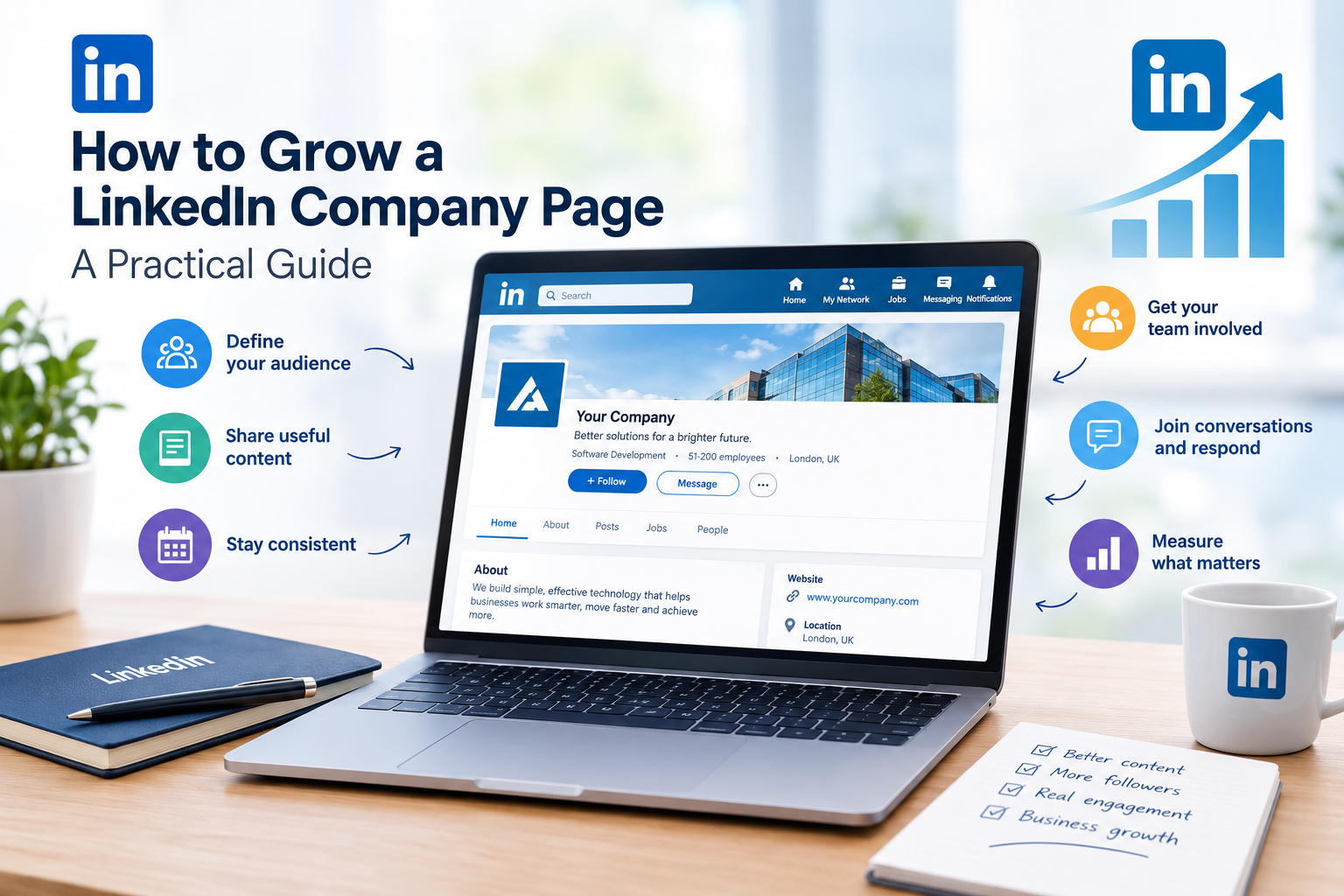
A LinkedIn Company Page gives customers, partners, job seekers, and industry peers a place to learn about your business. But creating a Page is only the first step. To give people a reason to follow it, your updates need to be useful to the people you want to reach.
This guide explains how to set up your Page, plan relevant posts, involve your team, and measure whether your LinkedIn activity is helping your business.
Make the Page clear before promoting it
When someone visits your Company Page, they should be able to tell what your business does and who it helps.
Review the basics:
Use a recognizable logo as the Page image.
Add a banner that reflects your business or its work.
Write a straightforward description of your products, services, or expertise.
Include accurate website and contact details.
Keep the Page’s industry, location, and other business information current.
A polished Page won’t attract an audience on its own, but incomplete or unclear information can make visitors hesitate to follow or contact you.
Decide who the Page is for
A Company Page may speak to customers, potential employees, partners, or other businesses. Decide which group matters most for your next few months of content.
For example, a software company writing for small businesses might explain common workflow problems. A local marketing agency might share campaign lessons, practical advice, and examples of work. A business trying to hire might show what its team does and what kinds of roles it offers.
Trying to address every audience in every post can make the Page feel unfocused. Choose one main audience for each update.
Share useful company content, not just announcements
A steady stream of product announcements can make a Page feel like a noticeboard. Mix business updates with posts that help people understand a problem, make a decision, or learn from your experience.
A practical content mix could include:
Short explanations of questions customers often ask
Lessons from a project, with private client details removed
Useful advice related to your industry
New product, service, or team updates with enough context to matter
Employee perspectives or behind-the-scenes work
A clear explanation of how your business solves a specific problem
Before publishing, ask: “Would this be useful to someone who doesn’t already know our company?” If the answer is no, add context or rethink the post.
Create a schedule you can maintain
Consistency helps people recognize that your Page is active. Plan a realistic publishing rhythm rather than posting several times in one week and then going quiet. LinkedIn’s own Page guidance recommends regular, relevant updates as part of building an audience. (LinkedIn Page growth guidance)
For a small team, one or two well-prepared posts each week may be easier to maintain than daily updates. Use a simple calendar with a topic, intended audience, format, and publishing date for each post. Review the schedule monthly and adjust it based on what people respond to.
Help employees take part naturally
Employees can help more people discover the Company Page by sharing useful company updates with their own professional networks. Make it easy for them to participate by sharing posts that are relevant to their work and giving them room to add their own perspective.
Avoid treating employees as a source of automatic likes or comments. Genuine discussion is more useful than asking everyone to repeat the same message. LinkedIn also recommends encouraging employees to engage with the organization’s presence and share relevant content. (LinkedIn guidance on measuring and improving engagement)
Join conversations and respond to people
A Company Page can participate in conversations beyond its own posts. Follow relevant organizations, respond when your business is mentioned, and answer genuine questions on your updates.
Keep replies specific and professional. If a question needs personal or account information, invite the person to continue through a private channel rather than asking them to post sensitive details publicly.
Measure results that match your goal
Choose a few measures that reflect what you want the Page to accomplish. If your goal is awareness, review follower growth and post reach. If your goal is site visits, track link clicks and what visitors do after arriving. If you want enquiries, record how many relevant messages or leads came from LinkedIn.
Review results over several weeks rather than judging the Page by one post. Look for patterns in topics, formats, and calls to action. Use those patterns to decide what to publish next.
Where LinkedIn promotion services fit
Some businesses also explore paid or third-party promotion services. These are separate from building a useful Page and publishing relevant content. Review the description, requirements, and delivery conditions for any service before choosing it. Don’t treat follower or engagement numbers by themselves as proof of business results.
You can review SMMCute’s LinkedIn services and compare the available options with your goals.
A simple four-week starting plan
Week 1: Update the Page information and choose the main audience.
Week 2: Publish a helpful post that answers a real customer or industry question.
Week 3: Share a company update with context and invite employees to add their own perspective if it’s relevant to them.
Week 4: Review Page activity and decide which topic to develop further.
Growing a LinkedIn Company Page takes useful content, a clear audience, and regular attention. Focus on helping the people you want to reach, then use the results to improve your next month of posts.